Understand your options, prepare for your appointment and know what to expect from your results.
Before booking allergy testing in Dublin, ask which test you need, who will assess you and what the fee includes. Find out how someone will explain your results and guide your next steps.
Sneezing, itchy skin or reactions after eating can leave you unsure where to turn. However, similar symptoms can have different causes. A useful assessment starts with your symptoms and medical history.
If you are considering allergy testing in Dublin, use these questions to prepare for your consultation.
The right assessment depends on your symptoms, when they happen and your suspected triggers.
A food allergy involves your immune system. Food intolerance can involve difficulty digesting certain foods. Symptoms can overlap, so bloating or a rash alone cannot confirm either condition.
Keep notes about what happened, what you ate and how soon symptoms began. Your GP can use this information to assess possible causes.
Speak to your GP if you suspect a food allergy, have recurring symptoms or have had a severe reaction. They can assess whether specialist referral is needed.
Suspected anaphylaxis needs emergency care. Call for medical help for breathing difficulty, sudden throat swelling or collapse after a possible allergic reaction.
Ask for the exact test name and why it suits your symptoms. Different tests answer different questions.
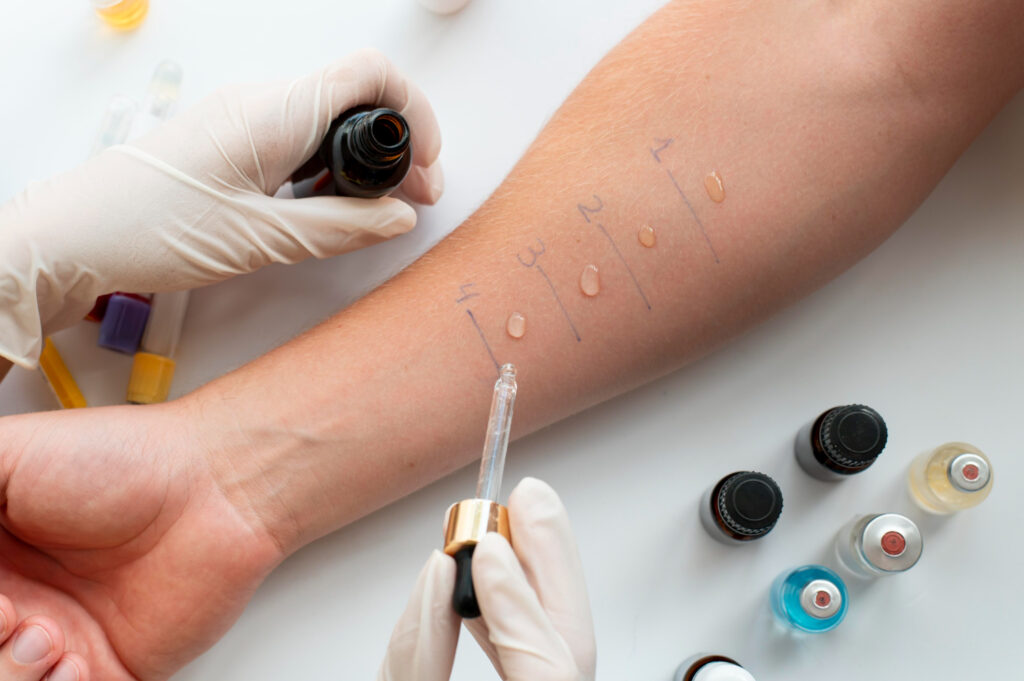
Skin prick testing places small amounts of suspected allergens on the skin, followed by a light prick. A clinician checks for a local reaction. Ask about suitability, possible risks and safety arrangements.
This blood test measures antibodies to selected allergens. A positive result can show sensitisation, but it does not confirm an allergy by itself. Your reaction history matters.
Patch testing helps investigate allergic contact dermatitis. A supervised food challenge may help clarify a suspected food allergy. It requires specialist assessment and supervision.
| Test | Question to ask |
| Skin prick test | Is this suitable for my symptoms? |
| Specific IgE blood test | Which allergens will you investigate? |
| Patch test | Could a contact allergy explain my rash? |
| Food challenge | Do I need specialist assessment? |
Do not try a food challenge at home.
Ask what the test measures and how the result helps establish a diagnosis.
IgE and IgG are different antibodies. IgG food panels are not recommended for diagnosing food allergy or food intolerance. A long list of flagged foods does not prove those foods cause symptoms.
The HSE also advises against alternative allergy tests such as hair analysis, Vega testing and kinesiology. These methods lack reliable evidence.
If someone offers “food sensitivity testing”, ask them to explain the method, evidence and limitations before paying.
Choose a provider who clearly explains the practitioner’s relevant qualifications and role.
Ask these questions:
For skin testing, ask about emergency equipment and trained staff. The HSE notes that skin prick testing carries a small risk of anaphylaxis.
If you are booking for a child, confirm the provider’s age limits and experience with children.
Testing should focus on suspected triggers from your reaction history.
Possible allergens include particular foods, grass pollen, house dust mites and pet dander. Tell the clinician whether symptoms happen after meals, during certain seasons or around animals.
Ask why each allergen is included. HSE guidance recommends targeted specific IgE testing based on clinical history rather than general screening panels. Testing more substances does not automatically give more useful answers.
The total cost depends on the consultation, test method and follow-up included.
Request a written breakdown before booking. Check whether the fee covers:
Ask whether you need a GP referral. If you have health insurance, check cover directly with your insurer. A clinic receipt does not guarantee reimbursement.
Bring a clear record of your symptoms and follow the provider’s instructions for your specific test.
Useful items include:
Ask whether antihistamines affect the planned test. They can interfere with some skin tests. Do not stop prescribed medicine without clinical advice.
Confirm whether you need to fast. Avoid eating a suspected trigger to demonstrate a reaction. Do not remove foods from a child’s diet without advice from their GP or dietitian.
An assessment usually starts with a discussion, followed by appropriate testing or referral.
The clinician asks about suspected triggers, reaction timing, previous episodes and relevant health conditions.
They explain which investigation may help and whether a specialist should assess you.
You receive instructions about the procedure, preparation and possible risks.
The clinician explains the findings alongside your symptoms and discusses further care.
Ask your chosen provider to confirm their own process before attending.
Results can support a diagnosis, but they need clinical interpretation.
A positive result may show sensitisation without symptoms on exposure. A negative result may require further review if your history still suggests an allergy. Ask whether false positives or other test limitations affect your findings.
Before leaving, check when you will receive results and who will explain them. Request a written report for your records.
If dietary changes are needed, ask about registered dietitian support. Avoid cutting out several foods based only on a test report.
Confirm the assessment options, full costs and follow-up arrangements before choosing an appointment.
Use this short checklist when you contact Dr Acu Herbs:
Visit our allergy testing page and contact Dr Acu Herbs to discuss the available options before booking.

As one of Dublin’s best therapeutic treatment clinics, Dr Acu Herbs delivers the highest quality care and puts our clients first. We would like to thank them for entrusting us with their well-being and providing meaningful feedback that helps us continuously improve!


